By Wiyao Awesso, Realtor®, VA Loan Specialist & Loan Officer, U.S. Navy veteran | DRE# 02058584 | NMLS# 1939042 | Updated November 2026
Quick answer: If your mortgage payment went up but your interest rate didn't change, the cause is almost always your escrow account. Your servicer collects property taxes and homeowners insurance with your payment. When those bills rise, or when a California supplemental tax bill arrives after you buy, your escrow account comes up short and your payment goes up to cover the shortage and the higher future bills. You can check the escrow analysis for errors, ask to spread a shortage over 12 months, and shop your insurance.
What's Inside Your Mortgage Payment
Most payments include four parts, often called PITI:
- Principal: pays down the loan balance.
- Interest: fixed on a fixed-rate loan.
- Taxes: property taxes, including Mello-Roos and special assessments.
- Insurance: homeowners insurance, plus mortgage insurance on many loans.
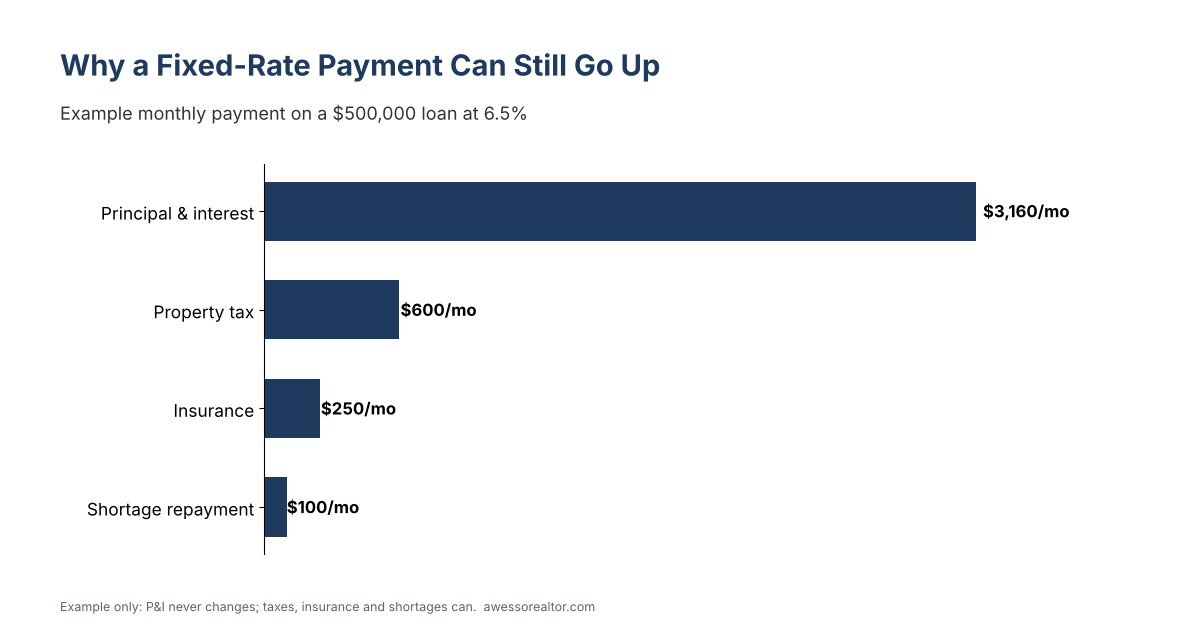
On a fixed-rate loan, principal and interest never change. Taxes and insurance can change every year, so that's where payment increases come from.
The Five Most Common Reasons Your Payment Went Up
1. Homeowners insurance increased
California insurance premiums have risen sharply, and some homeowners were moved to the California FAIR Plan plus a separate policy after their insurer stopped renewing. A higher premium paid from escrow creates a shortage.
2. A supplemental property tax bill
When you buy a home in California, the county reassesses it at the purchase price. Riverside County then sends a supplemental tax bill for the difference between the old and new assessed value. Many new owners don't expect it, and escrow often isn't set up for it.
3. Normal tax increases and special assessments
Under Proposition 13, your assessed value can rise up to 2% a year. Mello-Roos and other special taxes often have their own annual increases.
4. Your first-year escrow was set too low
At closing, escrow is based on the seller's old tax bill or an estimate. If the estimate was low, your first annual review catches up.
5. A tax or insurance bill was paid twice or late
Servicer errors happen. A duplicate payment or penalty can make your escrow look short when it isn't.
How the Annual Escrow Analysis Works
Under the federal Real Estate Settlement Procedures Act (RESPA), your servicer reviews your escrow account at least once a year and sends you a statement. Key rules:
| Situation |
What the rules generally allow |
| Cushion |
Servicer may keep a cushion of up to one-sixth of the year's escrow payments (about two months) |
| Shortage of one month's escrow payment or more |
Must allow you to repay over at least 12 months |
| Smaller shortage |
Servicer may ask you to pay within 30 days or spread it over 12 months |
| Surplus of $50 or more |
Refunded to you within 30 days if your loan is current |
Your new payment usually rises for two reasons at once: higher projected bills for the coming year, plus your share of last year's shortage.

How to Read Your Escrow Statement
- Find the projected disbursements for taxes and insurance next year.
- Compare them with your actual tax bill from the Riverside County Treasurer-Tax Collector and your insurance declarations page.
- Look for the shortage amount and how it's being collected.
- Check the cushion the servicer is keeping.
- Look for any bill paid twice or any late penalty.
What You Can Do About a Higher Payment
- Ask to spread the shortage over 12 months or more if it isn't already.
- Pay the shortage in a lump sum if you have the cash. Your payment will still rise for higher future bills, but by less.
- Shop your insurance with an independent agent. Ask about deductibles and discounts.
- Dispute errors in writing. Send a notice of error to your servicer's designated address. Servicers must respond within set timelines.
- Appeal your assessed value if your home's market value is below its assessed value. Riverside County accepts decline-in-value reviews.
- Check exemptions: the California homeowners' exemption, and the disabled veterans' exemption if you qualify.
Example: How a Shortage Raises Your Payment
Say your taxes and insurance were $7,200 last year, but they're projected at $8,400 next year, and your account ended $1,200 short:
- New monthly escrow for next year: $8,400 ÷ 12 = $700 (was $600)
- Shortage spread over 12 months: $1,200 ÷ 12 = $100
- Total escrow increase: about $200 a month for the next year, then about $100 above the old amount after the shortage is repaid
Cushion rules can change the exact numbers. This is only an illustration.

Can You Get Rid of Escrow?
Some conventional loans let you waive escrow with enough equity and good payment history, often for a fee. FHA and VA loans generally require escrow. Without escrow, you pay taxes and insurance yourself, so you need to budget carefully.
If the New Payment Is Too High
Call your servicer before you miss a payment. Ask about spreading the shortage, and talk to a free HUD-approved housing counselor. If the home no longer fits your budget, read bought at a high rate and struggling? What to do before you miss a payment and your options in California.
Supplemental Tax Bills After You Buy
New California owners are often surprised by one or two supplemental tax bills in the first year. They're sent directly to you, not always to your servicer, and they cover the difference between the seller's old assessed value and your purchase price for part of the year. Some servicers pay them from escrow; many don't. Ask your servicer, and if you pay it yourself, keep the receipt so escrow isn't charged twice.
Insurance Tips for California Homeowners
- Compare quotes from an independent agent who works with several insurers.
- Ask about discounts for roof updates, alarms and home-hardening steps.
- Review your deductible; a higher one can lower your premium.
- If you're on the FAIR Plan, ask about a "difference in conditions" policy and shop again every year.
- Send your servicer the new declarations page right away so escrow pays the right bill.
Exemptions That Can Lower Your Tax Bill
| Exemption |
Who qualifies |
| Homeowners' exemption |
Owner-occupants; reduces assessed value by $7,000 |
| Disabled veterans' exemption |
Qualifying veterans with a service-connected disability rating (or their surviving spouses) |
| Decline-in-value review (Prop 8) |
Owners whose market value fell below assessed value |
File with the Riverside County Assessor. Deadlines apply.
Related Guides
Frequently Asked Questions
Why did my mortgage go up if I have a fixed rate?
Your principal and interest stay the same, but property taxes and insurance paid through escrow can rise. That increases your total payment.
What is an escrow shortage?
It's when your escrow account doesn't have enough to cover the year's tax and insurance bills plus the allowed cushion. Your servicer collects the difference, usually over 12 months.
Will an escrow shortage hurt my credit?
Not by itself. Only missed or late mortgage payments are reported. If the higher payment is hard to make, call your servicer before you fall behind.
Who can I talk to for free help?
A HUD-approved housing counselor, your servicer, and the Riverside County Assessor's office for assessment questions.
Questions About Your Payment?
Call or text me at 951-282-7007 for a confidential conversation about your options, including what your home is worth today.
#MortgagePayment #EscrowShortage #PropertyTax #HomeInsurance #SupplementalTax #RiversideCounty #Murrieta #Temecula #Homeowners #California #MortgageTips
Sources: Consumer Financial Protection Bureau; 12 CFR § 1024.17 (RESPA escrow rules); Riverside County Treasurer-Tax Collector; Riverside County Assessor-County Clerk-Recorder; California State Board of Equalization. This article is general information, not legal, tax or financial advice.

About the Author
Wiyao Awesso
Realtor® | VA Loan Specialist & Loan Officer | U.S. Navy Veteran
Wiyao is a Murrieta-based Realtor® and licensed loan officer who specializes in VA loans and military relocation. After about 20 years in the U.S. Navy, he helps service members, veterans and first-time buyers buy, sell and finance homes across Riverside and San Diego counties, from the first showing to the closing table.
DRE# 02058584 | NMLS# 1939042 | 951-282-7007 | More about Wiyao
Get a VA Loan QuoteApply Now